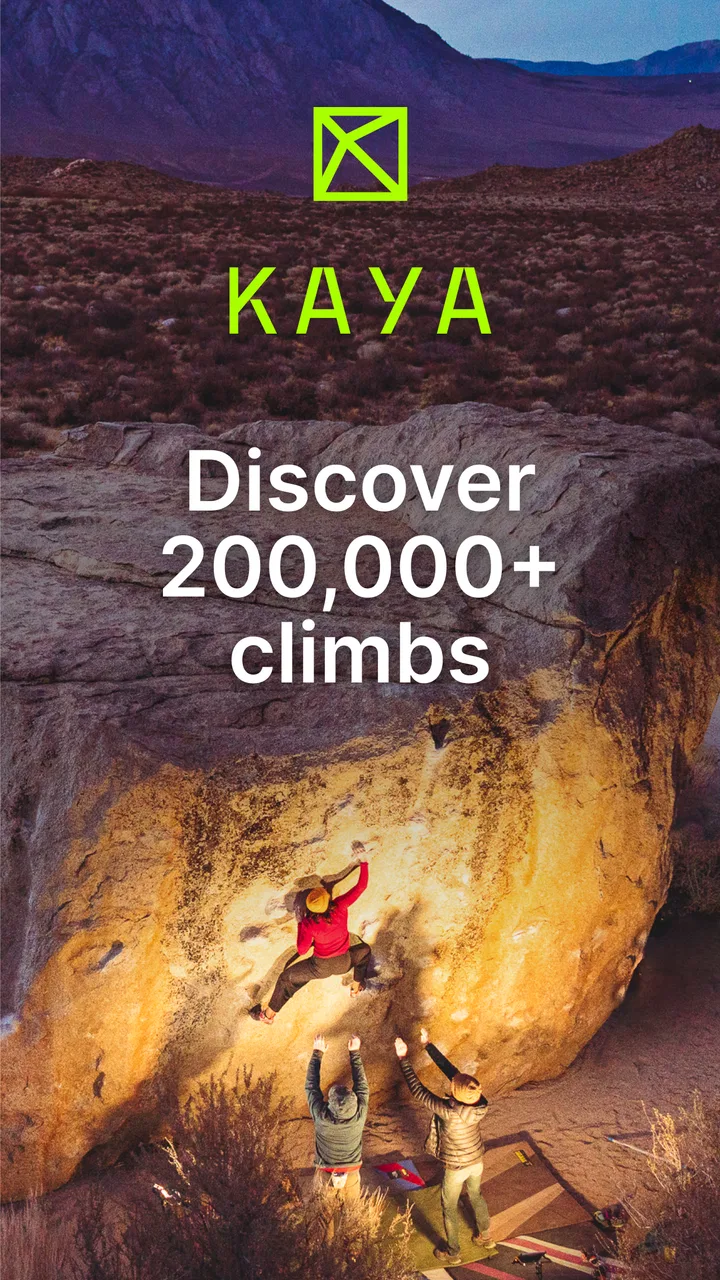
KAYA: THE CLIMBER’S APP
- 3.9
- Rating
- 100.00K
- Installs
- Free
- Price

 Analysis by App-foxy
I approached KAYA as a climber’s training and community companion rather than as a general sports tracker. Its focus is clear: help people engage with climbing content, follow progress, and stay connected to the activity between sessions. That narrow purpose is its biggest strength, because the app feels more relevant to a boulderer or indoor climber than a broad fitness platform ever could. It is free to install, aimed at a Teen audience, and developed by KAYA Climbing.
My overall impression is positive but measured. The app has a useful climbing-first identity and enough reach to feel established, with more than one hundred thousand installs. At the same time, its average rating sits at 3.9 from roughly six hundred ratings, which suggests a mixed experience rather than universal approval. I would recommend trying it if climbing is already part of your routine, but I would not treat it as an automatic replacement for every training log, gym board, or social platform you already use.
How KAYA fits into a climber’s routine
The most natural way to use KAYA is around a climbing session. Before going to the gym, I would use it to get into a climbing mindset and look for relevant content. Afterward, it can become a place to reflect on what I worked on, keep the momentum going, and remain connected when I am away from the wall. That makes it more interesting than a simple stopwatch or workout counter, because climbing progress is not only about duration or calories.
You May Also Like

 Blood Strike: 2.5 Anniversary
Blood Strike’s Loadouts Turn Every Drop Into a Tactical Gamble
A close look at Blood Strike’s custom loadouts: how fast access to signature weapons reshapes its battle royale rhythm, rewards preparation, and narrows the gap between fights.

 Pandora - Music & Podcasts
Pandora’s Music Is Easy to Start, but Harder to Recover
Pandora’s strength is its low-effort path from a seed to a station. Its weak spot is how much confidence it asks you to place in connection, setup, and quiet recovery.

 8 Ball Pool
 Is Built on Rivalries, Rematches, and Routine
A close look at the rivalries, rematches, shared routines, and unanswered safety questions that turn a quick pool match into a persistent mobile community.

 Samsung Music
’s Quiet Strength Is Playing What You Already Own
Its reach comes less from spectacle than from dependable access to a personal library. That simplicity is both the app’s strongest retention engine and its ceiling.

 AccuWeather: Weather Radar
AccuWeather Review: A Quick, Clear Forecast for Everyday Decisions
For everyday plans, the best forecast is the one you can understand quickly. AccuWeather makes rain timing, radar, and local conditions easy to act on, with a few trade-offs.

 Hill Climb Racing
Why Hill Climb Racing Still Turns Crashes Into One More Run
A tiny car, a bumpy hill and one more upgrade: Hill Climb Racing keeps resurfacing because its simple chaos makes every near-miss feel personal.
More From Our News Desk



Climbing has its own language and habits: grades, attempts, projects, beta, movement quality, and the satisfaction of finally linking a sequence. A general sports app often forces those details into a generic workout template. KAYA is designed around climbing, so its appeal comes from recognizing that a short session can still be meaningful and that a failed attempt may be useful information rather than a poor workout result.
In everyday use, I can imagine opening the app on the way to an evening gym visit, checking what I want to focus on, then returning to it after the session while the details are still fresh. The practical benefit is not just recording activity. It is creating a small pause where I decide what I am trying to improve instead of climbing randomly until I get tired.
That said, I would not expect it to replace a coach. An app can help organize attention, but it cannot watch my hips, notice that I am overgripping, or tell me whether a shoulder movement is becoming unsafe. For technique corrections, injury management, and personalized programming, an experienced coach remains the better option.
A focused alternative to broad fitness apps
Compared with a conventional running, cycling, or gym-tracking app, KAYA is more specialized and therefore potentially more useful for climbers. A general platform may be better for combining climbing with running, strength work, sleep, or other health routines. KAYA makes more sense when climbing is the center of the picture and the surrounding experience matters more than a single universal activity dashboard.
It also occupies a different space from a plain notes app. Notes give me complete freedom, but they require me to build my own structure. A climbing-specific app can reduce that setup work and make the record feel connected to the activity. The trade-off is flexibility: if my preferred way of logging a project is unusual, a dedicated system may feel more restrictive than a blank page.
I would also separate it from a gym’s own app or a route-board system. A gym-specific tool may be best for current wall information, local announcements, or routes that change frequently. KAYA is more attractive when I want a broader climbing-oriented experience rather than a digital extension of one particular facility.
What the developer and the numbers suggest
KAYA Climbing is the developer behind the app, and that specialized identity matters to me. The product does not present itself as a generic wellness tool with climbing added as an afterthought. Its store summary, “All the beta. All the stoke.”, communicates a climbing-centered attitude, while the short description simply identifies it as KAYA. I read that as a sign of a focused product, not a promise that it will cover every training need.
The app was released on September 26, 2019, and the current version is 3.52.4. It supports Android 7.0 and newer, which makes it accessible on many older devices. That broad compatibility is useful for climbers who keep a durable phone for the gym or do not upgrade often. The free entry point also lowers the barrier to testing it before deciding whether its deeper options fit a personal routine.
There are in-app purchases ranging from $7.99 to $99.99 per item. I would pay attention to the purchase screen before committing to a workflow that depends on paid functionality. A free download is helpful, but “free to install” is not the same as “everything is free,” and the wide range of possible purchase amounts means different users may encounter very different value calculations.
Trust starts with visible choices
For an app connected to exercise habits and possibly personal climbing activity, I care about trust as much as presentation. I want to know what I am choosing to share, what requires an account, and whether the app lets me use its useful parts without making every action public. KAYA should be judged through those visible choices rather than through assumptions about how a climbing app must work.
My practical advice is to read each permission or account prompt instead of accepting it automatically. If a feature asks for access that does not feel necessary for the way I plan to use the app, I would pause and decide whether that feature is worth the trade-off. I would also review profile and sharing options before entering personal details or posting anything that reveals my regular gym, schedule, or climbing partners.
I am deliberately cautious here because privacy is not something I can assess from branding alone. A climbing-focused design may feel friendly and community-driven, but that does not automatically tell me how information is handled. The safest approach is to use the controls that are actually shown, keep the profile as minimal as practical, and revisit those choices after an update.
Account control matters more than convenience
When I test a sports app, I separate three questions: can I browse or understand its purpose without immediately building a public identity, can I control what appears under my name, and can I change my mind later? Those questions are especially relevant in climbing, where a profile can reveal ability, habits, preferred locations, and social connections.
If I were setting up KAYA for the first time, I would use a simple username, avoid adding unnecessary personal information, and inspect every audience or visibility setting before interacting with the community. I would not assume that a private intention remains private once I publish a session, comment, image, or achievement. A good rule is to share only what I would be comfortable showing to another climber at the gym.
I would also keep purchase decisions separate from social pressure. Climbing communities can make progress feel public, and that can create a temptation to buy features simply to keep up with other users. I prefer to try the free experience first, identify the exact problem I want to solve, and only then consider whether an in-app purchase is justified.
Data-sensitive moments during real use
The most sensitive moments are not necessarily the first launch. They happen when I create an account, log a session, connect with other people, publish progress, or make a purchase. Each action can turn a private climbing habit into information associated with an identifiable profile. I would slow down at those points rather than treating them as routine taps.
For example, logging a project may feel harmless, but repeated entries can reveal how often I visit a particular place and when I usually train. A public comment may include details about a route, a gym, or a friend. A photo can disclose more than intended through its background. None of this means I would avoid the app; it means I would use its social side deliberately instead of sharing everything by default.
On a shared or borrowed device, I would be even more careful. I would sign out when appropriate, avoid saving payment details unless I trust the device, and check that another person cannot open my account with a single tap. On my own phone, I would still use a screen lock and keep the operating system current. These are ordinary precautions, but they matter when a sports app becomes a record of personal routines.
Purchases deserve their own check. Since the available in-app items can range from a modest amount to a much larger one, I would confirm the exact item, billing flow, and account being charged before approving anything. If a child or teenager uses the app, I would enable the device’s purchase protections and discuss spending beforehand. The Teen content rating is not a substitute for household controls.
Three ways I would use it more intelligently
First, I would use KAYA as a reflection tool rather than trying to record every detail during a difficult session. Constant phone handling can interrupt concentration and make the experience less social. I would climb first, then capture only the information that will change my next session: a movement that failed, a technique that helped, or a project worth revisiting.
Second, I would create a clear boundary between public motivation and private training notes. If the app offers sharing choices, I would keep sensitive details private while sharing only the parts that genuinely encourage me. This avoids turning every attempt into a performance and makes the record more useful for honest self-assessment.
Third, I would compare the app’s value against my existing routine after a few sessions, not after the first exciting setup. If it helps me return to projects with better focus, stay connected to climbing, or understand my habits, it has earned a place on my phone. If I am still duplicating everything in a notebook or another tracker, I would simplify and keep only the tool that gives me the clearest benefit.
Who will enjoy it, and who should skip it?
KAYA is best suited to indoor climbers, boulderers, and people who enjoy the social and motivational side of climbing. It is also a reasonable option for someone who finds general fitness apps too impersonal and wants an experience built around climbing vocabulary and goals. Newer climbers may appreciate having a dedicated place to build consistency, while experienced climbers may value a more focused way to revisit projects and habits.
I would be less enthusiastic about it for someone who wants a complete strength-and-conditioning plan, detailed health metrics, or one app for every sport. A climber who mainly needs current information from one local gym may get more practical value from that gym’s own service. Someone who dislikes accounts, community interaction, or in-app purchase prompts should also approach it cautiously and keep the setup as minimal as possible.
It is not the right choice for replacing professional advice after an injury. It is also not a shortcut to better technique. The app can support consistency and attention, but the hard work still happens on the wall, and the quality of that work depends on rest, movement practice, sensible progression, and listening to the body.
My cautious verdict
I see KAYA as a credible climbing companion with a clear audience, not as an all-purpose sports solution. The free installation makes it easy to explore, its Android compatibility is friendly to older phones, and its climbing-specific approach gives it an advantage over generic trackers when the goal is to stay engaged with climbing itself. The 3.9 average from about six hundred ratings tells me to keep expectations realistic, but it does not erase the app’s useful niche.
My recommendation is to start with the smallest possible profile, inspect account and sharing controls, and use the free experience long enough to test a real climbing routine. Do not enter personal information simply because a field is available, and do not make a purchase until you can name the specific problem it solves. The best reason to use KAYA is focused climbing support; the best reason to hesitate is uncertainty about whether its paid and social layers fit your personal boundaries.
For me, that balance makes it worth trying if climbing is a regular part of life. I would keep my expectations centered on organization, motivation, and connection rather than coaching or complete fitness analysis. Used selectively and with attention to visible privacy and account choices, it can add value without taking over the way I climb.
FAQs for KAYA: THE CLIMBER’S APP
01What is KAYA: THE CLIMBER’S APP, and who is it designed for?
KAYA: THE CLIMBER’S APP is designed for people interested in climbing, whether they are beginners learning the basics or experienced climbers looking to organize and improve their sessions. The app can be useful for discovering climbing-related information, planning activities, and keeping important details in one place. Before downloading, users should check whether its available content and features match their preferred climbing discipline and experience level.
02Does KAYA: THE CLIMBER’S APP work for indoor and outdoor climbing?
The app’s usefulness may depend on the type of climbing you practice and the locations covered by its database or community features. It is worth checking whether KAYA supports indoor gyms, outdoor crags, bouldering areas, sport routes, or other disciplines relevant to you. Coverage can also vary by country or region, so users should confirm that nearby climbing locations and local information are available before relying on it.
03Can beginners use KAYA, or is it mainly intended for experienced climbers?
Beginners can generally benefit from a climbing-focused app, especially when they need help discovering locations, understanding climbing terminology, organizing sessions, or building a consistent routine. However, an app should not replace professional instruction, supervision, or proper safety training. New climbers should use KAYA as a planning and information tool while learning essential techniques, equipment use, route safety, and responsible outdoor behavior from qualified instructors.
04Does KAYA: THE CLIMBER’S APP require an internet connection or user registration?
Some functions may require an internet connection, particularly features involving maps, route information, synchronization, community content, account access, or updates. Availability of offline tools can differ depending on the app version and platform. Users should also review the registration process and requested permissions before creating an account. If you plan to use the app at remote climbing areas, verify in advance whether important information can be accessed without mobile data.
05Is KAYA: THE CLIMBER’S APP free to download, and are there in-app purchases?
The download price and available features can vary between Android and iOS, as well as between regions and app versions. Some climbing apps offer core tools for free while reserving advanced planning, tracking, mapping, or community features for subscriptions or in-app purchases. Before downloading, review the current store listing carefully, including recurring billing terms, trial conditions, privacy information, and whether the free version provides enough functionality for your needs.
Pros
- Tracks climbs
- routes
- and training progress in one place.
- Useful reference for discovering climbing areas and routes.
- Helps organize sessions and maintain a consistent climbing routine.
- Can support goal setting for climbers at different experience levels.
- Practical companion for reviewing past climbs and performance.
Cons
- Coverage and route details may vary significantly by climbing location.
- Some features may require an account or paid access.
- Manual logging can become time-consuming after longer sessions.
- Outdoor use may be limited by weak signal or unavailable offline data.
- Beginners may need extra guidance beyond the app’s tracking tools.

KAYA: THE CLIMBER’S APP
Gallery